
Charging Time (hours) = Battery Capacity (Ah) / Charger Current (A)
300Ah / 20A = 15 hours
1. Depth of Discharge (DoD): You rarely charge from a completely empty battery (0% State of Charge). A more common scenario is charging from 20% or 50% State of Charge (SoC).
2. Charging Profile: LiFePO4 batteries use a Constant Current (CC) / Constant Voltage (CV) charging method.
-
Constant Current (Bulk) Stage: The charger delivers a steady 20A. This is the fast, linear part of the charge and accounts for about 80% of the capacity.
-
Constant Voltage (Absorption) Stage: The battery voltage reaches the absorption voltage (typically around 14.2V – 14.6V). The charger holds this voltage, and the current gradually tapers down as the battery fills up. This last 10-20% takes a surprisingly long time.
3. Efficiency Losses: No system is 100% efficient. There are small losses in the form of heat in the wires, the battery’s internal resistance, and the BMS (Battery Management System). A general rule of thumb is to assume about 95% efficiency for LiFePO4.
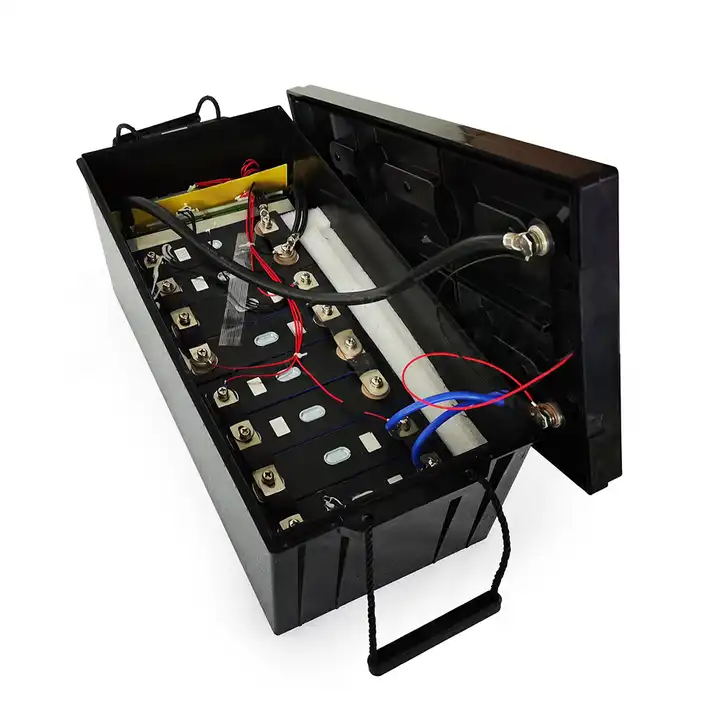
Practical Calculation Scenarios
Let’s apply these factors to some real-world scenarios.
Assumptions:
-
Charger: 20A
-
Battery: 300Ah LiFePO4
-
Efficiency: 95%
-
Bulk Stage: Covers ~80% of the capacity.
Scenario 1: Charging from 20% State of Charge (SoC)
-
Capacity to fill: 300Ah * 80% = 240Ah
-
Adjusted for efficiency: 240Ah / 0.95 ≈ 253 Ah (this is the total energy the charger needs to provide).
-
Bulk Stage Time: The 20A charger will be in the fast, bulk stage until about 80-90% SoC. This is the most efficient part.
-
Time ≈ 253 Ah / 20 A = ~12.6 hours to fully charge.
-
In this common scenario, expect a full charge to take approximately 13 hours.
Scenario 2: Charging from 50% State of Charge (SoC)
-
Capacity to fill: 300Ah * 50% = 150Ah
-
Adjusted for efficiency: 150Ah / 0.95 ≈ 158 Ah
-
Estimated Time: 158 Ah / 20 A = ~7.9 hours
In this scenario, expect a full charge to take approximately 8 hours.
Summary Table
| State of Charge When Starting | Estimated Practical Charging Time |
|---|---|
| 0% (Fully Depleted) | ~15 – 16 hours |
| 20% | ~12 – 13 hours |
| 50% | ~7 – 8 hours |
Important Considerations & Recommendations
-
Your 20A Charger is a Good “Trickle” Charger: For a 300Ah battery, a 20A charger is on the slower side (20A / 300Ah = 0.067C). This is very gentle on the battery and excellent for longevity, but it means long charging times.
-
What is a Faster Alternative? A common recommendation is to charge at a rate of 0.2C to 0.5C. For your 300Ah battery, this would be:
-
0.2C = 60A Charger (Charge time from 20%: ~4-5 hours)
-
0.5C = 150A Charger (Charge time from 20%: ~2 hours)
-
Always check your battery’s specifications for its maximum allowed charge current before buying a larger charger.
-
-
BMS Protection: Your battery has a BMS that will stop the charge once the battery is full, so you don’t need to worry about overcharging if you leave it connected.
-
Solar Charging: If you are using this in an RV or off-grid system, a 20A solar controller would follow the same principles and time estimates, though the actual current will vary with sunlight.
Conclusion:
While the simple math says 15 hours, a more realistic time for a full charge from a low state (e.g., 20%) is 12 to 13 hours. Charging from a higher state (e.g., 50%) will take roughly 7 to 8 hours. The 20A charger is safe and gentle but quite slow for a battery of this size.