To determine if your 24V 50Ah LiFePO4 battery is compatible with your inverter, you should systematically evaluate several key factors and perform practical tests. Here’s a step-by-step guide based on the search results:
🔧 1. Check Voltage Compatibility
-
Ensure the inverter’s input voltage range matches the battery’s nominal voltage (24V) and its operational range (typically 20V to 29.2V for LiFePO4) .
-
LiFePO4 batteries have a higher charging voltage (around 28.8V–29.2V) compared to lead-acid (25.7V). Verify that the inverter can handle this range without triggering over-voltage shutdowns .


⚡ 2. Assess Capacity and Power Requirements
-
Calculate the power demand: A 24V 50Ah battery provides approximately 1280Wh of energy. Ensure the inverter’s power rating (in watts) aligns with your load requirements, considering surge power for devices like motors .
-
The inverter’s continuous discharge current should not exceed the battery’s BMS limit (e.g., 50A for a typical 50Ah battery) .
🔌 3. Review Charging Profile Compatibility
-
If the inverter has a built-in charger, it must support LiFePO4 charging parameters:
-
Bulk/Absorption voltage: ~28.8V .
-
Float voltage: ~27.2V or lower .
-
Charging current: Ideally 0.2C (10A for a 50Ah battery) .
-
-
Avoid using lead-acid charging profiles, as overcharging can damage LiFePO4 batteries .
📟 4. Evaluate BMS and Communication Protocols
-
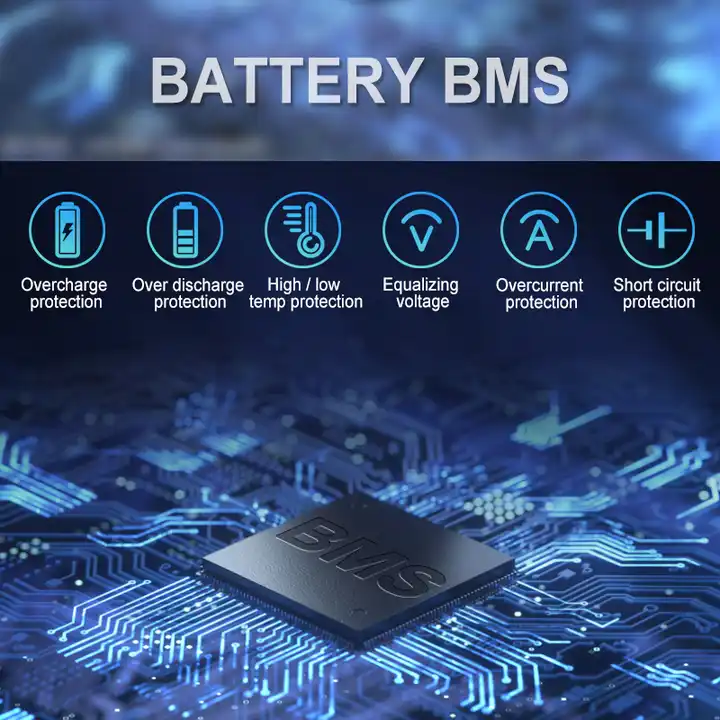
Ensure the battery’s BMS (e.g., over-voltage, under-voltage, temperature protection) is functional and that the inverter can communicate with it if supported (e.g., via CAN or RS485) .
-
Some inverters require closed-loop communication for optimal performance .
🔎 5. Physical and Safety Checks
-
Use appropriately sized cables (e.g., 6AWG for high-current applications) to minimize voltage drop and overheating .
-
Install a fuse or DC breaker between the battery and inverter for protection .
-
Ensure proper grounding and ventilation .
🧪 6. Practical Testing Steps
-
No-load Test: Connect the battery to the inverter without any load. Check if the inverter powers on and measures the input voltage correctly .
-
Load Test: Gradually add load (e.g., from 500W to 1500W) while monitoring voltage stability and inverter performance. Ensure the battery does not trigger BMS protection due to high current .
-
Charging Test (if applicable): If the inverter has a charger, test with a partiality discharged battery. Monitor the charging voltage and current to ensure they align with LiFePO4 requirements .
-
Temperature Monitoring: Check for overheating in both the battery and inverter during operation .
⚠️ 7. Common Compatibility Issues
-
Low Voltage Cut-off (LVCO): Adjust the inverter’s LVCO to ~24.8V (3.1V per cell) to prevent premature shutdown .
-
Charging Mismatch: If the inverter cannot be reprogrammed for LiFePO4, use an external compatible charger .
-
BMS Disconnection: Some inverters may misinterpret BMS protections as faults. Test under various load conditions .
📊 Summary Table for Quick Reference:
| Factor | Requirement for Compatibility | Test Method |
|---|---|---|
| Voltage Range | Inverter accepts 20V–29.2V DC input | Measure voltage at inverter terminals with a multimeter. |
| Charging Profile | Supports LiFePO4 settings (28.8V absorption, 27.2V float) | Check inverter settings; monitor charging with a voltmeter. |
| BMS Protection | Inverter does not override BMS protections (e.g., low-temperature charging cut-off) | Test in cold environments; verify BMS triggers. |
| Current Handling | Inverter’s draw ≤50A continuous; surge within battery limits | Apply incremental loads while monitoring current. |
| Communication | Closed-loop compatibility if supported (e.g., CAN bus) | Review inverter manual; test communication connectivity. |
💡 Conclusion:
Compatibility largely depends on the inverter’s programmability and design. If your inverter lacks LiFePO4-specific settings (e.g., older models), consider using an external charge controller or upgrading to a compatible inverter . Always refer to both the battery and inverter manuals for detailed specifications. If uncertainties persist, consult manufacturers or solar energy forums for model-specific advice .