
सौर ऊर्जा की दुनिया में, नियंत्रक के रूप में कार्य करता है “दिमाग” आपके सिस्टम का. ए के बीच चयन करना पीडब्लूएम और एक एमपीपीटी नियंत्रक, और इसे अपने बैटरी बैंक के साथ सही ढंग से मिलान करें, उच्च प्रदर्शन करने वाली प्रणाली और समय से पहले विफल होने वाली प्रणाली के बीच अंतर हो सकता है.
यहां वह सब कुछ है जो आपको सही चुनाव करने के लिए जानना आवश्यक है.
1. पीडब्लूएम बनाम. एमपीपीटी: वास्तविक अंतर क्या है??
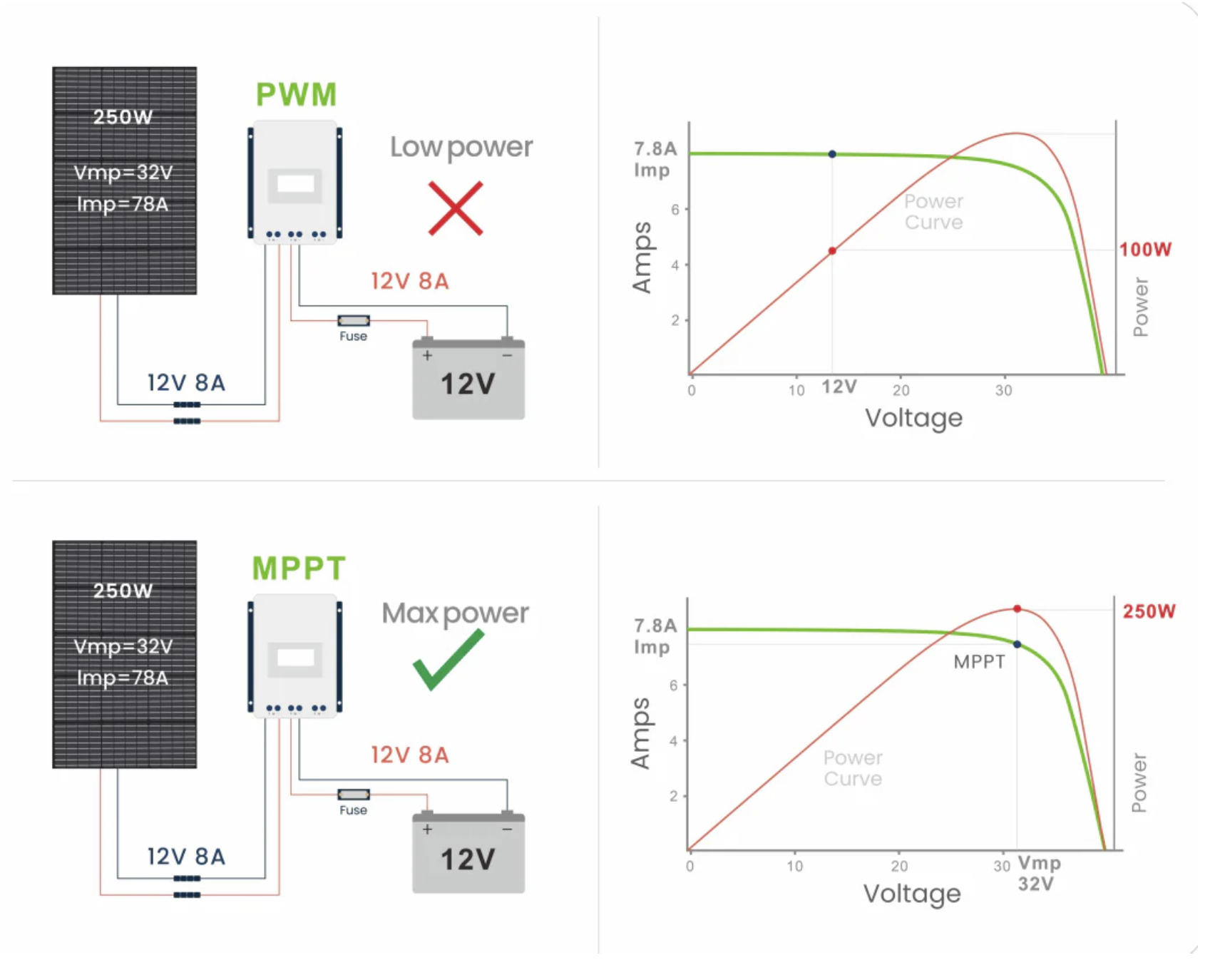
सही ढंग से चयन करने के लिए, आपको पहले यह समझना होगा कि ये दोनों प्रौद्योगिकियाँ ऊर्जा को कैसे संभालती हैं.
पीडब्लूएम (पल्स चौड़ाई उतार - चढ़ाव)
PWM को एक के रूप में सोचें “मानक स्विच.” यह आपके सौर पैनलों और बैटरी के बीच सीधे संबंध के रूप में कार्य करता है.
-
यह काम किस प्रकार करता है: जब बैटरी लगभग फुल हो जाए, यह तेजी से “फ्लिक” वोल्टेज बनाए रखने के लिए स्विच चालू और बंद करें.
-
नकारात्मक पक्ष: यह धारा बढ़ाने के लिए वोल्टेज को समायोजित नहीं कर सकता. यदि आपका पैनल 18V है और आपकी बैटरी 12V है, अतिरिक्त 6V बस बर्बाद हो जाता है.
-
के लिए सर्वोत्तम: छोटा, सरल प्रणालियाँ (उदा।, शेड में एकल बैटरी का रखरखाव) जहां बजट प्राथमिकता है.
एमपीपीटी (अधिकतम पावर प्वाइंट ट्रैकिंग)
एमपीपीटी को एक के रूप में सोचें “स्मार्ट ट्रांसफार्मर.” यह काफी अधिक उन्नत और कुशल है.
-
यह काम किस प्रकार करता है: यह लगातार पैनल के आउटपुट पर नज़र रखता है और गणना करता है “अधिकतम पावर प्वाइंट.” यह पैनलों से अतिरिक्त वोल्टेज लेता है और इसे परिवर्तित करता है अतिरिक्त धारा बैटरी के लिए.
-
फायदा: यह है 25%-30% अधिक कुशल पीडब्लूएम की तुलना में, विशेषकर ठंड या बादल वाले मौसम में.
-
के लिए सर्वोत्तम: व्यावसायिक सेटअप, आर वी एस, ऑफ-ग्रिड होम्स, और बड़े सौर सरणियों का उपयोग करने वाली कोई भी प्रणाली.

2. सुनहरा नियम: अपने एमपीपीटी का आकार कैसे तय करें
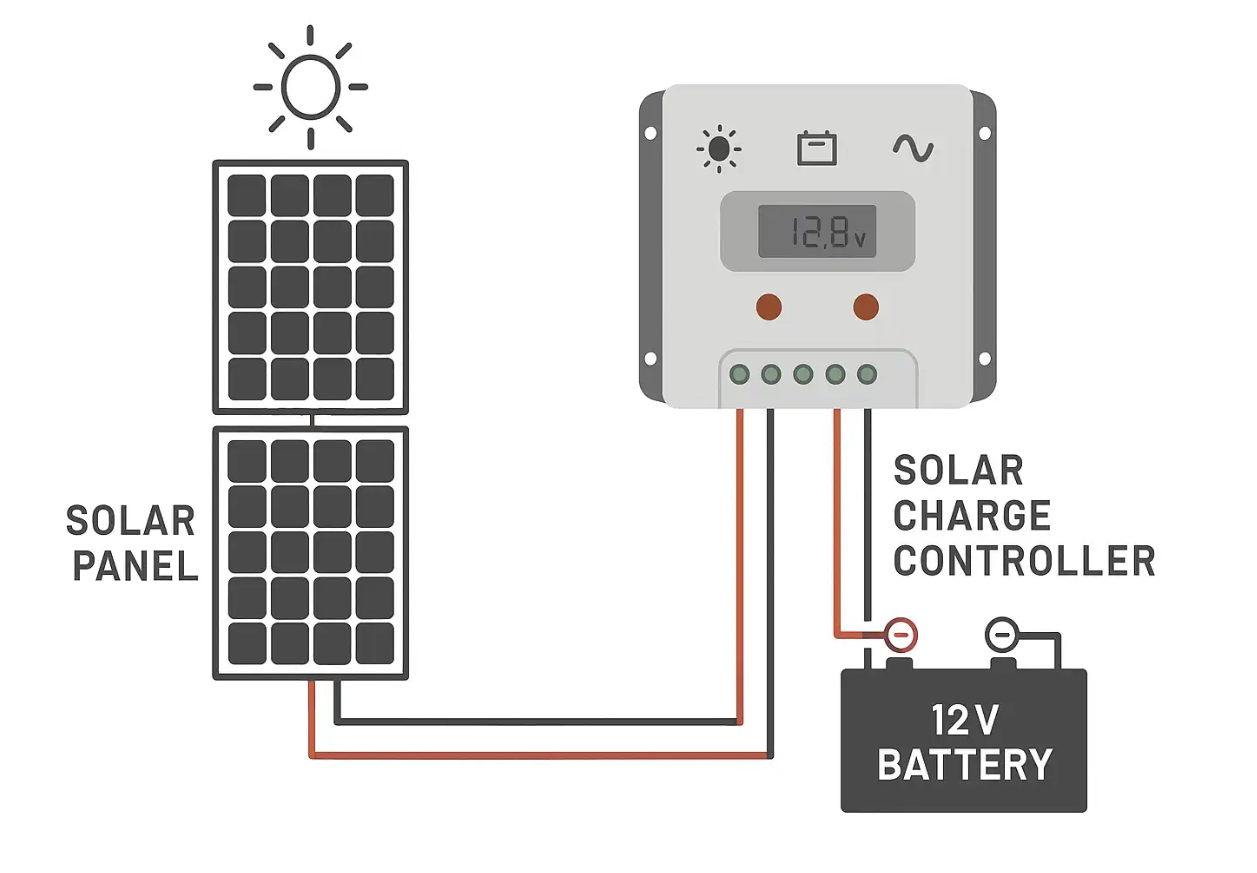
एमपीपीटी का चयन करते समय, आपको दो दिशाओं को देखना होगा: ऊपर (आपके सौर पैनलों के लिए) और नीचे (आपकी बैटरी के लिए).
ए. ऊपर देखो: सौर पैनल वोल्टेज (वोक)
किसी एमपीपीटी को नष्ट करने का सबसे आम तरीका उससे अधिक है अधिकतम इनपुट वोल्टेज.
-
जाँचें वोक (ओपन सर्किट वोल्टेज) आपके सौर पैनलों के पीछे.
-
यदि आप पैनलों को कनेक्ट करते हैं शृंखला, उनका वोल्टेज बढ़ जाता है.
-
नियम: आपका कुल ऐरे वोल्टेज कम से कम होना चाहिए 15% ठंड के मौसम के लिए एमपीपीटी की निर्धारित सीमा से कम (जिससे वोल्टेज बढ़ जाता है).
बी. तिरस्कार करना: चार्जिंग करंट (एम्प्स)
एमपीपीटी की रेटिंग (उदा।, 40ए, 60ए) संदर्भित करता है कि यह कितना करंट भेज सकता है बैटरी को.
-
FORMULA: $कुल सौर वाट div बैटरी वोल्टेज = आवश्यक एम्प्स$.
-
उदाहरण: यदि आपके पास 800W के पैनल और 12V की बैटरी है: $800डब्ल्यू div 12V = 66.6A$. आपको एक की आवश्यकता होगी 80एक एमपीपीटी.

3. महत्वपूर्ण कारक: बैटरी मिलान
एक नियंत्रक केवल उतना ही अच्छा है जितना आपकी बैटरियों के साथ उसकी अनुकूलता.
क्षमता मिलान (एएच)
एक छोटे एमपीपीटी को बड़े बैटरी बैंक के साथ न जोड़ें, या विपरीत.
-
बड़ी बैटरियां (उदा।, 600आह+): उच्च-वर्तमान एमपीपीटी की आवश्यकता है (60ए-100ए). यदि धारा बहुत कम है, सूरज की रोशनी के सीमित घंटों के दौरान बैटरी कभी भी पूरी तरह चार्ज नहीं हो सकती है.
रसायन विज्ञान संगति (The “बीएमएस” नियम)
आधुनिक प्रणालियों का अक्सर उपयोग किया जाता है LiFePO4 (लिथियम) बैटरियों.
-
चेतावनी: सुनिश्चित करें कि आपके एमपीपीटी के पास एक समर्पित है “लिथियम” तरीका. लिथियम बैटरियों में विशिष्ट चार्जिंग प्रोफ़ाइल होती हैं. एक मानक का उपयोग करना “लैड एसिड” सेटिंग बैटरी प्रबंधन प्रणाली को नुकसान पहुंचा सकती है (बीएमएस) या कोशिकाएं.
टालना “मिश्रण” बैटरियों
सबसे आम गलतियों में से एक विभिन्न क्षमताओं की बैटरियों को जोड़ना है (उदा।, एक 200Ah और एक 600Ah) उसी एमपीपीटी को.
-
जोखिम: विभिन्न क्षमताओं का मतलब अलग-अलग आंतरिक प्रतिरोध है. भारी उपयोग के दौरान, छोटी बैटरी अधिक काम करेगी, जिससे बीएमएस ट्रिप हो जाए या बैटरी ज़्यादा गरम हो जाए.
-
समाधान: की बैटरियों का सदैव उपयोग करें एक ही ब्रांड, आयु, और क्षमता एक ही बैंक में.
खरीदारों के लिए सारांश चेकलिस्ट
खरीदने से पहले, इन चार बिंदुओं की पुष्टि करें:
-
क्षमता: क्या बैटरी वोल्टेज से विभाजित कुल सौर वाट क्षमता एमपीपीटी की एम्प रेटिंग में फिट बैठती है?
-
सुरक्षा: क्या सौर सरणी का कुल वोक एमपीपीटी के अधिकतम इनपुट वोल्टेज से नीचे सुरक्षित रूप से रहता है?
-
बैटरी प्रकार: क्या नियंत्रक आपकी विशिष्ट बैटरी रसायन शास्त्र का समर्थन करता है (लैड एसिड, जेल, या लिथियम)?
-
भविष्य का प्रमाण: यदि आप बाद में और पैनल जोड़ने की योजना बना रहे हैं, लंबे समय में पैसे बचाने के लिए अभी उच्च एम्प रेटिंग वाला एमपीपीटी खरीदें.
उच्च गुणवत्ता वाला एमपीपीटी चुनना एक निवेश है. जबकि इसकी अग्रिम लागत PWM से अधिक है, बढ़ी हुई दक्षता और बैटरी सुरक्षा उपयोग के पहले वर्ष के भीतर ही भुगतान कर देगी.