
Proċeduri Operattivi Standard li Jkopru Ħsarat tal-Ħardwer, Settings tal-Parametri, u Deep Wake-Up
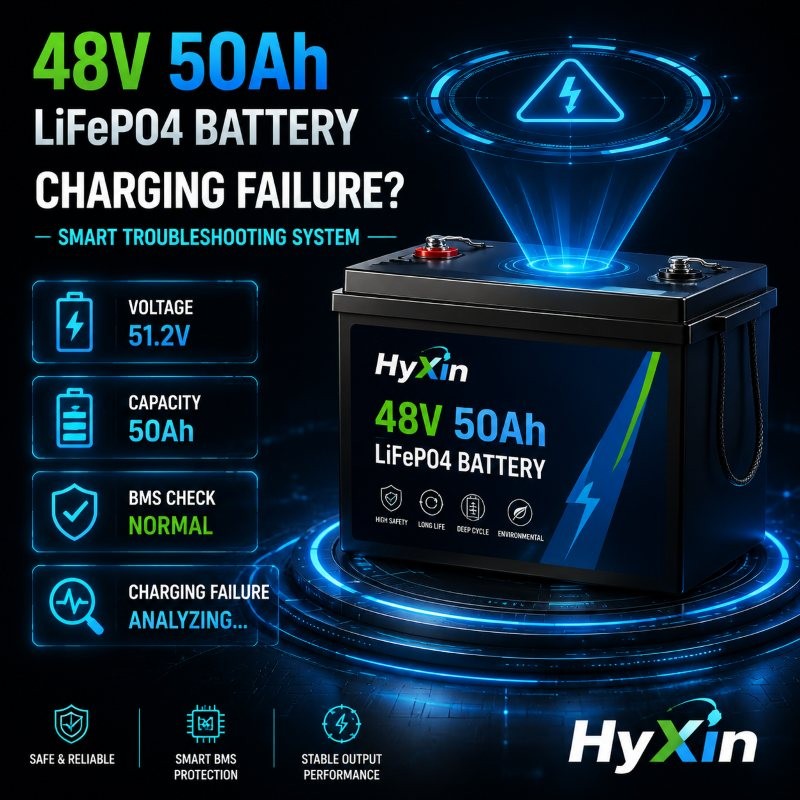
Lithium Iron Phosphate ($\test{LiFePO}_4$) batteriji huma magħrufa għall-ħajja eċċezzjonali tagħhom, stabbiltà termali, u kapaċitajiet deep cycling. A standard 48V 50Ah $\test{LiFePO}_4$ pakkett tal-batterija (tipikament ikkonfigurat f'a $16\test{S}$ arranġament bl-użu ta 'ċelloli nominali ta' 3.2V) hija skjerata ħafna fit-telekomunikazzjonijiet, ħażna ta 'enerġija solari, u vetturi elettriċi ħfief. Madankollu, meta pakkett bħal dan jonqos milli jżomm ħlas, tfixkel operazzjonijiet kritiċi.
Id-dijanjosi u s-soluzzjoni ta 'din il-kwistjoni teħtieġ sistematika, approċċ immexxi mid-data, teżamina kollox mill-parametri tal-iċċarġjar esterni għall-bilanċ intern taċ-ċelluli u s-Sistema ta 'Ġestjoni tal-Batterija (BMS) integrità.
1. Qafas Dijanjostiku Inizjali & Fatturi Esterni
Qabel ma tiżżarma l-pakkett tal-batterija jew tissuspetta degradazzjoni permanenti taċ-ċelluli, it-tekniċi għandhom jeskludu ħsarat fit-tagħmir ambjentali u periferali.
-
Restrizzjonijiet tat-Temperatura Ambjentali: $\test{LiFePO}_4$ il-kimika tippossjedi konfini termali stretti. Iċċarġjar hawn taħt $0^\circ\text{Ċ}$ ($32^\circ\text{F}$) mingħajr protezzjoni ta 'qtugħ ta' temperatura baxxa jqajjem kisi tal-litju fuq l-anodu, li tikkawża telf ta 'kapaċità irriversibbli u short circuits interni.
-
Verifika tal-Ħruġ tal-Ċarġer: Nuqqas ta' qbil bejn il-profil tal-output tal-ċarġer u r-rekwiżiti tal-batterija jipprevjeni l-iċċarġjar xieraq. A 16-serje 48V $\test{LiFePO}_4$ batterija teħtieġ vultaġġ bl-ingrossa / assorbiment tipikament bejn 56.8V u 58.4V (3.55V sa 3.65V għal kull ċellula). Jekk jintuża ċarġer standard taċ-ċomb-aċidu 48V, il-vultaġġ float tiegħu huwa baxx wisq, u l-mod ta 'desulfurization tiegħu jista' jikkawża protezzjonijiet tal-ħsarat BMS.
Benchmarks tal-Parametri Dijanjostiċi
| Parametru | Medda Operattiva normali | Limitu tal-Ħsara / Sinjal ta' Twissija |
| Vultaġġ tal-Ħruġ tal-Ċarġer | $56.8\test{V} – 58.4\test{V}$ | $< 54.0\test{V}$ (Output taħt vultaġġ) |
| Vultaġġ tal-Qtugħ tal-BMS (Ħlas żejjed) | $3.65\test{V} – 3.80\test{V}$ kull ċellula | $> 3.90\test{V}$ (Riskju ta' runaway taċ-ċelluli) |
| Vultaġġ tal-Qtugħ tal-BMS (Taħt Kwittanza) | $2.50\test{V} – 2.80\test{V}$ kull ċellula | $< 2.00\test{V}$ (Irqad fil-fond / Lockout) |
| Temperatura operattiva (Ħlas) | $0^\circ\text{Ċ}$ biex $45^\circ\text{Ċ}$ | $< 0^\circ\text{Ċ}$ (Riskju tal-kisi) |
| Reżistenza Interna (Pakkett b'saħħtu) | $< 30\,\test{m}\Omega$ (Pakkett totali) | $> 80\,\test{m}\Omega$ (Degradat / Reżistenza għolja) |

2. BMS Protezzjoni u “Modalità Sleep” Irkupru
Is-Sistema ta 'Ġestjoni tal-Batterija hija l-moħħ tal-pakkett 48V 50Ah, iddisinjat biex jiskonnettja ċ-ċirkwit waqt vultaġġ żejjed, taħt vultaġġ, kurrent żejjed, jew avvenimenti ta’ short-circuit.
-
Lockout taħt il-Vultaġġ: Jekk pakkett 48V jarmi taħt il-limitu minimu assolut tiegħu (tipikament madwar $40\test{V}$ biex $44\test{V}$, jew $2.5\test{V}$ kull ċellula), il-BMS jidħol fi stat ta 'għeluq tal-protezzjoni u jaqta' l-MOSFETs ta 'skarika/ċarġ. F'dan l-istat, chargers intelliġenti standard jistgħu jaqraw “0V” fit-terminals u jirrifjutaw li jibdew ċiklu ta 'ċarġ minħabba li ma jiskopru l-ebda vultaġġ oppost.
-
Proċedura ta' Irkupru: Biex tqum BMS irqad, tekniċi għandhom japplikaw ċarġer tal-litju dedikat b'a “0V tqum” jew “ħlas sfurzat” funzjoni, jew qabbad provvista ta 'enerġija kompatibbli li kapaċi twassal kontrollat, pre-charge ta 'kurrent baxx sakemm il-vultaġġi taċ-ċelluli individwali jogħlew 'il fuq mill- $2.8\test{V}$ limitu ta' rkupru.
3. Żbilanċ Intern taċ-Ċelloli u Degradazzjoni tal-Kapaċità
Jekk varjabbli esterni u settings tal-BMS huma normali, il-kawża ewlenija normalment tinsab fi ħdan l-intern $16\test{S}$ arkitettura taċ-ċelluli.
Il-Fenomenu ta' Rabta Dgħajfa fi Strings Serje
A 48F'50AH pakkett jiddependi fuq il-kapaċità uniformi ta 16 ċelluli individwali konnessi f'serje. Jekk anke ċellula waħda tiddegrada, juri reżistenza interna ogħla, jew ibati minn awto-ħruġ, jilħaq l-istat ta 'ċarġ sħiħ tiegħu ($\sim 3.65test{V}$) jew stat vojt ($\sim 2.5test{V}$) ħafna qabel il-bqija tal-pakkett.
-
Qtugħ prematur tal-iċċarġjar: Waqt l-iċċarġjar, jekk Ċellula #7 jilħaq $3.65\test{V}$ qabel iż-żmien minħabba l-kapaċità fade (E.g., niżel minn 50Ah għal 35Ah), il-BMS immedjatament jagħlaq l-iċċarġjar biex jipproteġi dik iċ-ċellula speċifika. Konsegwentement, il-pakkett ġenerali ta '48V jibqa' biss parzjalment iċċarġjat, timmanifesta bħala nuqqas li żżomm l-enerġija.
-
Limitazzjonijiet tal-Ibbilanċjar taċ-Ċelloli: Il-kurrenti standard tal-ibbilanċjar tal-BMS huma relattivament żgħar (normalment $30\test{mA}$ biex $100\test{mA}$). Jekk il-vultaġġ delta bejn iċ-ċelloli jaqbeż $100\test{mV}$, l-ibbilanċjar passiv ma jistax jikkoreġi d-drift waqt tieqa standard tal-iċċarġjar, jeħtieġu top-bilanċ manwali.
4. Protokoll ta' Soluzzjoni ta' Problemi pass pass
-
Pass 1: Kejl tal-Vultaġġ tat-Terminal
Kejjel il-vultaġġ taċ-ċirkwit miftuħ (OCV) tul it-terminali prinċipali pożittivi u negattivi bl-użu ta’ multimetru diġitali kkalibrat.
-
Qari huwa $48\test{V} – 54\test{V}$: Il-pakkett huwa operattiv; ipproċedi għall-ittestjar tal-kapaċità.
-
Qari huwa $0\test{V}$: Il-BMS tħawwad permezz tal-mod ta' protezzjoni jew il-fjus intern ikun minfuħ.
-
-
Pass 2: Iċċekkja Fjus u Kontinwità
Spezzjona l-fjus prinċipali intern jew estern. Spikes ta 'kurrent għoli jistgħu jonfoħ il-fjus kaptan, iżolament taċ-ċelloli mit-terminali esterni filwaqt li ċ-ċelloli interni jibqgħu intatti.
-
Pass 3: Aċċess u Kejjel Vultaġġi taċ-Ċelloli Individwali
Iftaħ b'attenzjoni l-kisi protettiv (josservaw protokolli ta 'għodda anti-statiċi u iżolati) biex taċċessa l-arness tal-ibbilanċjar tal-BMS. Kejjel il-vultaġġ ta 'kull wieħed mill- 16 ċelluli individwali.
-
Delta b'saħħitha: Il-varjanza tal-vultaġġ taċ-ċellula għandha tkun $< 30\test{mV}$ bi ħlas sħiħ.
-
Delta difettuż: Varjazzjoni $> 200\test{mV}$ jindika żbilanċ sever taċ-ċelluli jew degradazzjoni tal-kapaċità.
-
-
Pass 4: Wettaq Manwal Top-Ibbilanċjar
Jekk l-iżbilanċ jiġi kkonfermat, skonnettja l-BMS u ċċarġja ċelloli individwali ta' vultaġġ baxx billi tuża provvista ta' enerġija fuq bank ta' 3.65V b'ċellula waħda sakemm iċ-ċelloli kollha jaqblu b'mod preċiż, imbagħad reset iċ-ċiklu tal-BMS.
Konklużjoni
Is-soluzzjoni tal-problemi u t-tiswija ta’ batterija LiFePO4 ta’ 48V 50Ah li tonqos milli żżomm ħlas tiddependi fuq pass pass, approċċ minn ġewwa. Nibdew bl-esklużjoni tal-limiti tat-temperatura ambjentali esterna u l-kompatibilità tal-output tal-ċarġer, jimxu fuq l-identifikazzjoni ta 'protezzjoni ta' vultaġġ baxx BMS u “irqad” stati, u finalment għadis fid-differenzjali tal-vultaġġ u l-analiżi tad-degradazzjoni tal-kapaċità tal-intern $16\test{S}$ ċelluli tas-serje, kull pass jeħtieġ appoġġ preċiż tad-dejta. Permezz ta 'kejl standardizzat multimeter, spezzjonijiet tal-fjusijiet, dijanjostika tad-delta taċ-ċelluli individwali, u proċeduri manwali meħtieġa ta' bilanċ ta' fuq, it-tekniċi jistgħu jidentifikaw b'mod effiċjenti l-kawża ewlenija, timmassimizza r-restawr tal-prestazzjoni tal-ħażna tal-enerġija tal-pakkett tal-batterija u l-ħajja tas-servizz, u tiżgura t-tħaddim sikur u affidabbli tas-sistema tal-ħażna tal-enerġija.
Jekk jogħġbok ikkuntattja lilna għal aktar informazzjoni!